Plastic Bottle Manufacturers in UAE – Poly Cos

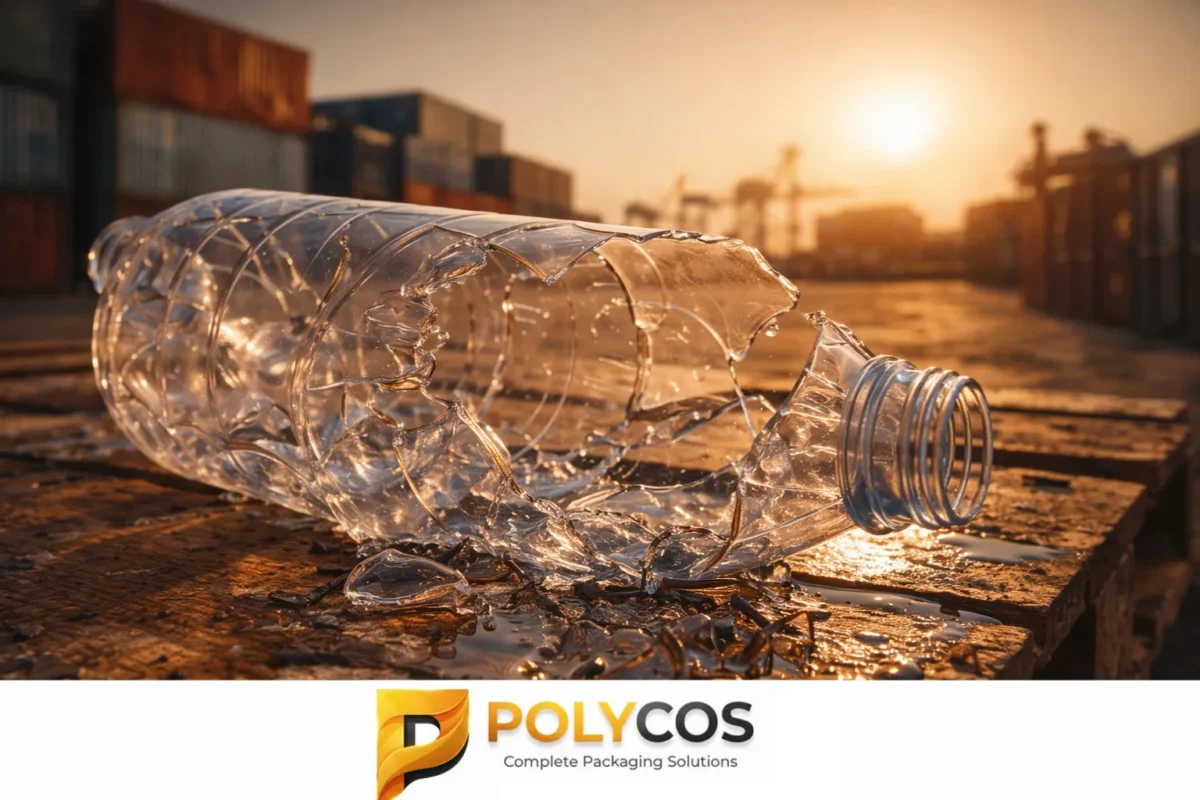
PET bottle brittleness occurs when low intrinsic viscosity resin or thermal degradation weakens PET polymer chains.
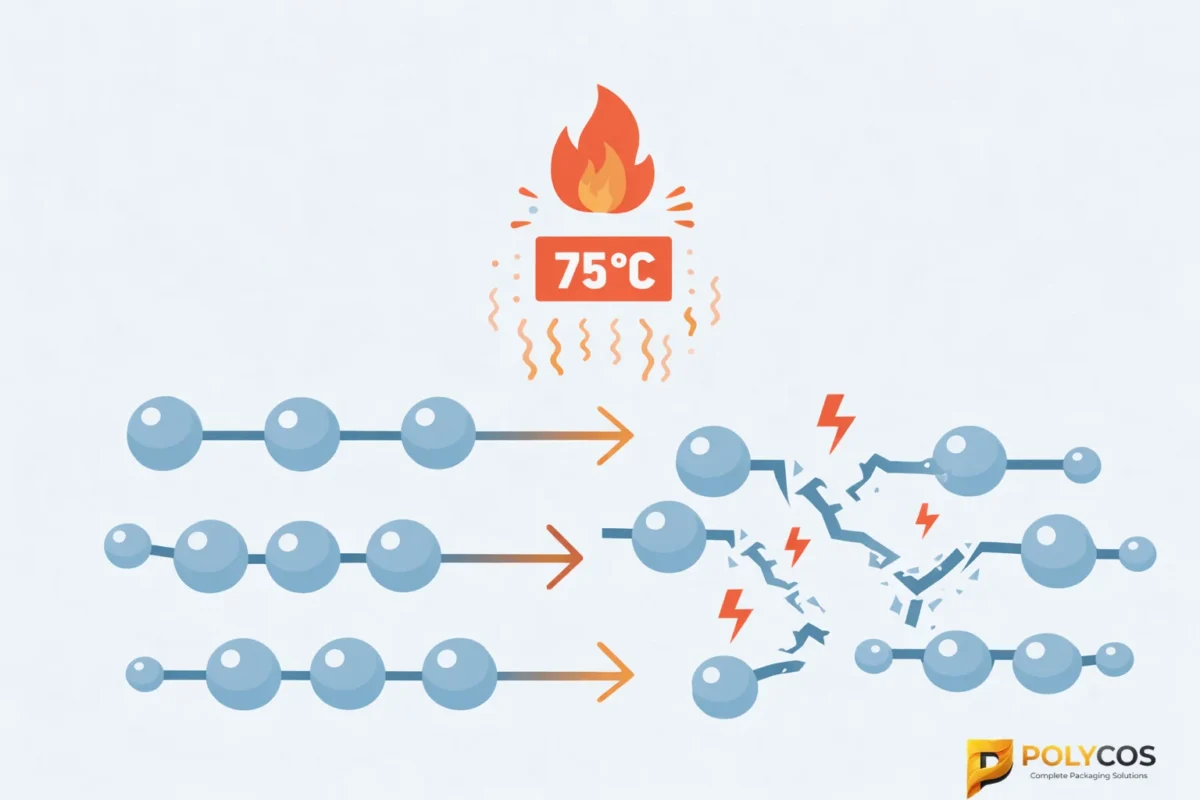
At 75°C container temperature, molecular chain scission increases fracture risk by 15% during GCC transit.
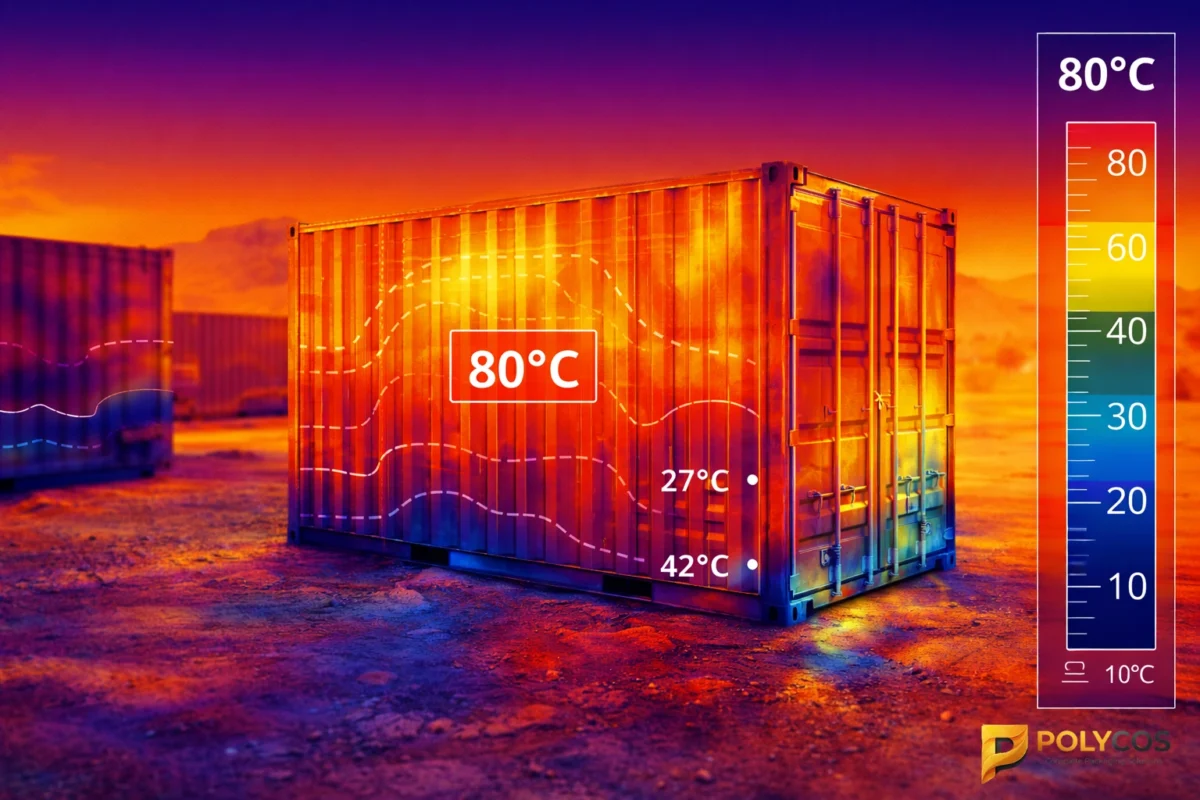
In UAE logistics environments where containers reach 70°C to 80°C, PET bottle durability becomes a material specification issue, not a handling problem.Procurement teams working with a PET bottle manufacturer often identify IV mismatch as the root cause after batch rejection.
The Molecular Root of PET Bottle Shattering
Brittle failure in PET starts with degradation of PET polymer chain length during processing.
When intrinsic viscosity drops below 0.70 dL/g, the PET bottle wall loses impact absorption capacity.
Primary factors causing molecular weakness include:
- Excess regrind above 25%
- Moisture in PET resin
- Overheating above 280°C
- Low IV resin usage
During a 12-hour Riyadh transit, truck vibration combines with 72°C heat.
The PET bottle shoulder feels papery and rigid instead of elastic.
By unloading, 8% of bottles show spiderweb fractures near the neck.
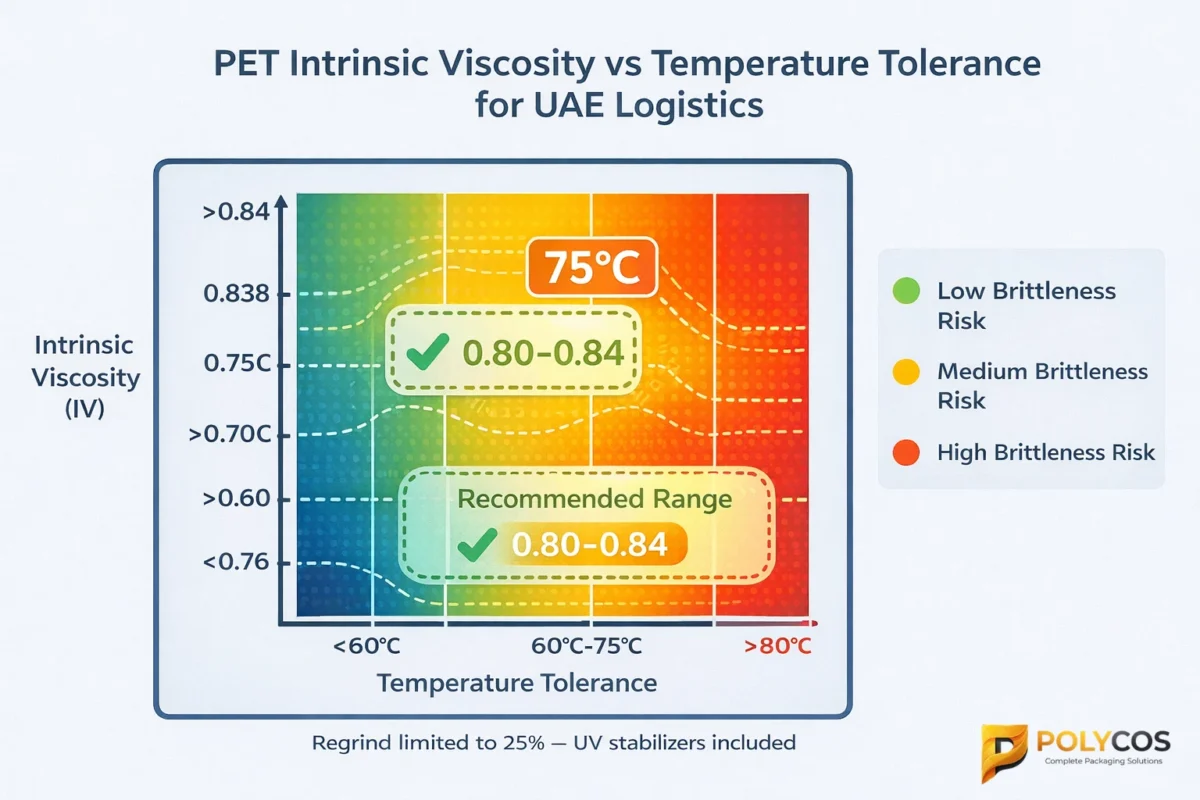
Intrinsic viscosity between 0.80 and 0.84 dL/g maintains structural integrity under transport stress.
Below that range, fracture propagation accelerates under vibration.
How UAE Summer Heat Triggers Structural Collapse
UAE logistics heat pushes PET bottles toward the glass transition temperature of 75°C.
At this threshold, PET polymer structure softens and allows micro-cracks to spread under load.
Logistics risks in Sharjah and Dubai include:
- 78°C container ceiling heat
- Rapid night cooling cycles
- Compression from stacked pallets
- Continuous transport vibration
A procurement manager opens a container in Jebel Ali after three days of 46°C ambient heat.
The air inside hits like a furnace blast, carrying a hot plastic smell.
As the pallet moves, a sharp cracking sound echoes as bottom-layer bottles collapse under a 400 kg load.
Breakage at this stage often results in full batch rejection costing up to AED 120,000 per container.
The same failure pattern appears in PET bottles crack in the Middle East shipping, where temperature-driven brittleness overrides handling quality.
The Role of Blow Molding Precision in Bottle Strength
Blow molding precision determines PET bottle wall consistency and structural strength.
Uneven stretch ratios create thin zones that fail under mechanical stress.
Key production factors include:
- Stretch ratio imbalance
- Uneven cooling rates
- Crystallinity variation
- Neck finish stress points
Polycos Industries blow molding process operates between 260°C and 280°C with controlled cooling at 10°C per second.
This maintains uniform wall thickness and prevents weak zones.
Bottle wall thickness below 0.35 mm increases failure probability significantly under stacking load.
Teams sourcing from a plastic bottle manufacturer in the UAE often request IV certification and thickness validation before approval.
Material Comparison: PET vs HDPE for Stress Resistance
Material selection determines failure risk under UAE logistics conditions.
Temperature tolerance and flexibility define performance.
| Feature | PET Bottle | HDPE Bottle |
| Glass transition | 75°C | Not applicable |
| Max continuous temp | 60°C | 80°C |
| Impact resistance | Moderate | High |
| Structure | Rigid, clear | Flexible, opaque |
| Logistics failure risk | Medium | Low |
Operations teams reviewing the PET vs HDPE material comparison often switch materials for high-heat distribution environments.
Practical Specification Guide for Procurement Managers
Correct PET specification prevents brittle failure during logistics.
Material quality and transport conditions must align.
Minimum specs for high-resilience packaging:
- IV rating 0.80 to 0.84
- Wall thickness above 0.35 mm
- Regrind below 25%
- UV stabilizers included
- ESMA and USP <661> compliance
Recommended logistics limits:
| Factor | Recommended Range | Risk Threshold |
| Container temperature | Below 60°C | Above 75°C |
| Storage temperature | Below 35°C | Above 40°C |
| Transit duration | Under 48 hours | Beyond 72 hours |
| Stacking load | Below 300 kg | Above 400 kg |
UV exposure over 30 days can reduce impact strength by up to 50%.
Ignoring UV stabilizers increases brittleness even before transport begins.
Procurement teams working with a reliable plastic bottle manufacturer UAE reduce rejection rates by validating IV, thickness, and additive composition.
Polycos Industries conducts forensic material reviews to identify why packaging fails in GCC supply chains.
Request a technical consultation and material specification check at plastic bottle manufacturer in uae before your next production cycle.
FAQ
Why do my PET bottles feel like glass when they break
PET bottles feel like glass when they break because low intrinsic viscosity reduces molecular flexibility.
IV below 0.70 dL/g creates brittle fracture behavior.
Does recycled PET increase brittleness
Yes, recycled PET increases brittleness because repeated heating shortens polymer chains.
Regrind above 25% significantly increases fracture risk.
What is the ideal storage temperature for PET in UAE
Ideal storage temperature for PET remains below 35°C.
Higher temperatures accelerate polymer degradation.
Can UV exposure cause PET to shatter
Yes, UV exposure causes PET degradation through photo-oxidation.
Impact resistance can drop by up to 50% over 30 days.
Is HDPE better for high-heat logistics
HDPE performs better in high heat because it remains flexible at higher temperatures.
It handles up to 80°C without structural failure.